

Vintage Fashion: A Complete Guide to Vintage Clothing and Style

Vintage fashion means clothing made in a previous era that still reflects the styles of its time. It sits at the crossroads of history, craftsmanship, personal style, and sustainability. Whether you love a 1950s swing dress, a broken-in pair of Levi’s, or a 1990s designer blazer, vintage lets you build a wardrobe that feels rare, thoughtful, and unmistakably yours.
This guide explains what qualifies as vintage, how it differs from retro and reproduction pieces, the defining eras from the 1920s to the 1990s, and the practical skills you need to shop, size, style, and care for older garments with confidence.
What Is Vintage Fashion?
Vintage fashion is the practice of wearing, collecting, and styling clothing that originates from an earlier period. The garments carry the design details, fabrics, and construction methods typical of their decade, which gives them a sense of history that new clothing rarely matches.
Beyond the clothes themselves, vintage fashion is also a mindset. It rewards curiosity, patience, and a willingness to hunt for one-of-a-kind pieces instead of buying whatever is trending. Many people are drawn to it for the quality of older construction, the individuality it offers, and its lower environmental footprint compared with fast Vintage Fashion.
What Makes Clothing Truly Vintage?
A garment is generally considered vintage when it is roughly 20 to 100 years old and clearly reflects the style of its era. Items older than 100 years are usually classified as antique, while more recent pieces are called modern or contemporary.
There is no single global authority that sets the rule, so definitions vary slightly across sellers and collectors. Two thresholds appear most often:
- The 20-year mark: Many retailers and publications treat anything 20 or more years old as vintage. By that standard, early-2000s pieces now qualify.
- The 30-year mark: Some dealers and collectors prefer a stricter cutoff, reserving “Vintage Fashion” for garments that show real distance from current trends.
What matters most is that the piece genuinely represents its period. A 1970s wrap dress with era-appropriate fabric, labels, and cut is Vintage Fashion. A brand-new dress designed to look 1970s is not.
Vintage vs. Retro vs. Reproduction vs. Secondhand
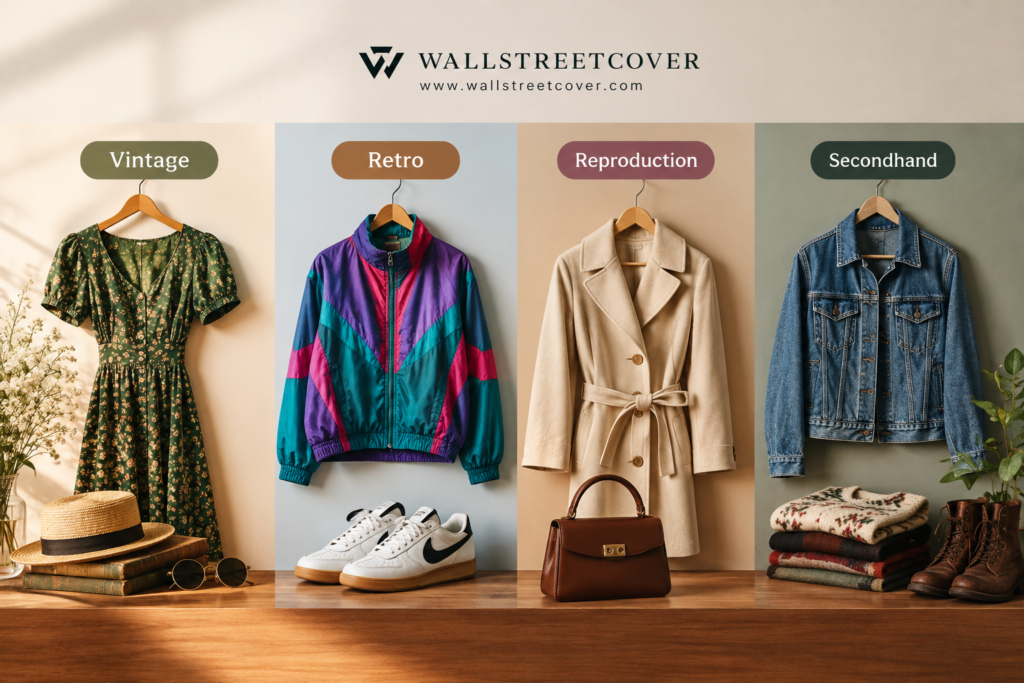
These four terms often get mixed up, but they mean different things. Understanding the distinctions helps you shop smarter and describe items accurately.
| Term | What it means | Age | Key point |
| Vintage | Original clothing from a past era that reflects that period’s style | ~20–100 years old | Genuinely old and period-authentic |
| Retro | New clothing styled to imitate a past era | Newly made | Looks old, but isn’t |
| Reproduction | A newly made copy of a specific older garment or design | Newly made | Faithful re-creation, not original |
| Secondhand | Any previously owned clothing, regardless of age | Any age | Used, but not necessarily vintage |
The simplest way to remember it: vintage is authentically old, retro and reproduction are new imitations, and secondhand simply means pre-owned. A thrift store may sell all four types side by side.
A Brief History of Vintage Fashion
Wearing and reusing older clothing is far older than the word “Vintage Fashion” itself. Before mass manufacturing, garments were expensive and labor-intensive, so people repaired, altered, and passed down clothing routinely. Worn items were re-tailored, remade, or eventually cut down for other household uses.
The idea of dressing in older styles by choice grew stronger in the 20th century. Subcultures tied to music and dance, such as rockabilly and swing, helped fuel interest in the looks of earlier decades. Over time, secondhand clothing shed its purely practical image and gained cultural cachet.
Media and celebrity attention accelerated the shift. Period films and television series renewed appetite for the glamour of mid-century Vintage Fashion, and public figures wearing vintage on red carpets helped make older clothing aspirational rather than merely thrifty. In the last two decades, e-commerce and social media widened access dramatically, connecting sellers and buyers across the world and turning vintage hunting into a global pursuit.
Popular Vintage Fashion Eras
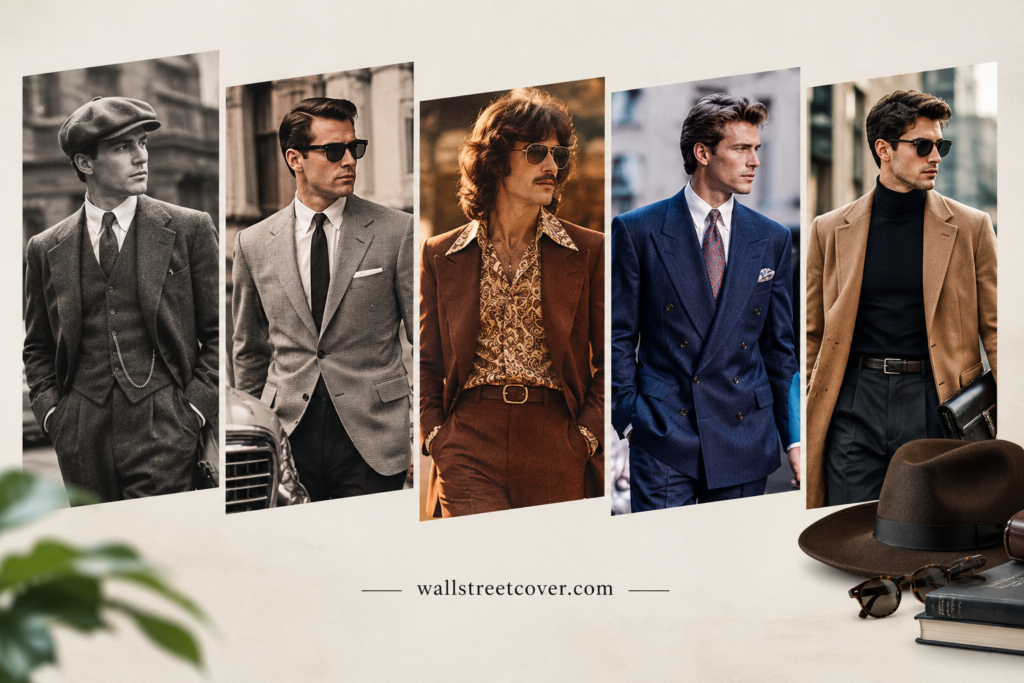
Each decade has a visual signature. Learning these signatures helps you date garments, shop with intention, and build looks that feel cohesive.
1920s
The 1920s favored a loose, dropped-waist silhouette. Think beaded flapper dresses, fringe, Art Deco patterns, and evening wear built for movement and dancing. Authentic pieces from this era are increasingly rare and delicate.
1930s
The 1930s brought a softer, more feminine line. Bias-cut gowns skimmed the body, hemlines dropped, and elegant draping defined eveningwear. Fabrics like silk and rayon were common.
1940s
Wartime shaped 1940s Vintage Fashion. Practicality and rationing led to structured shoulders, nipped waists, and utilitarian details. Tailored suits and knee-length dresses dominated.
1950s
The 1950s are a cornerstone of vintage style. Full swing skirts, cinched waists, polka dots, and fit-and-flare dresses define the decade’s romantic, feminine look, alongside tailored men’s suits and casual Americana.
1960s
The 1960s split between polished early-decade elegance and later mod and psychedelic energy. Shift dresses, bold geometric prints, miniskirts, and go-go boots capture the era’s youthful rebellion.
1970s
The 1970s embraced free-spirited bohemian and disco looks. Bell-bottoms, maxi dresses, suede, fringe, wide collars, and earthy color palettes are hallmarks, along with the rise of denim as a Vintage Fashion staple.
1980s
The 1980s went bold and oversized. Statement shoulders, bright colors, power suits, workwear brands, and early streetwear all define a decade that prized visibility and volume.
1990s
The 1990s leaned into minimalism and grunge simultaneously. Slip dresses, flannel, Vintage Fashion-style denim, band tees, and understated designer pieces make this one of the most sought-after eras today, partly because 1990s items are now widely available and affordable.
Popular Types of Vintage Clothing
Some garment categories consistently attract collectors and everyday wearers alike. Here are the most popular.
- Vintage dresses: From 1950s swing dresses to 1970s maxis, dresses are among the most collected vintage items because their silhouettes read instantly as period pieces.
- Vintage denim: Older Levi’s and workwear jeans are prized for durability, distinctive washes, and construction details like specific stitching and rivets.
- Vintage jackets: Leather jackets, denim jackets, bombers, and workwear coats age beautifully and layer well with modern outfits.
- Vintage shirts and tees: Hawaiian shirts, band tees, and single-stitch T-shirts are collector favorites, with graphics and fabric quality driving value.
- Vintage suits: Tailored men’s and women’s suits from the 1940s through the 1980s offer construction and materials that are hard to find new.
- Vintage accessories: Handbags, scarves, belts, hats, and gloves let you add a period touch without committing to a full vintage outfit.
- Vintage footwear: Boots, heels, and loafers can complete a look, though fit and structural wear require careful checking.
How to Identify Authentic Vintage Clothing
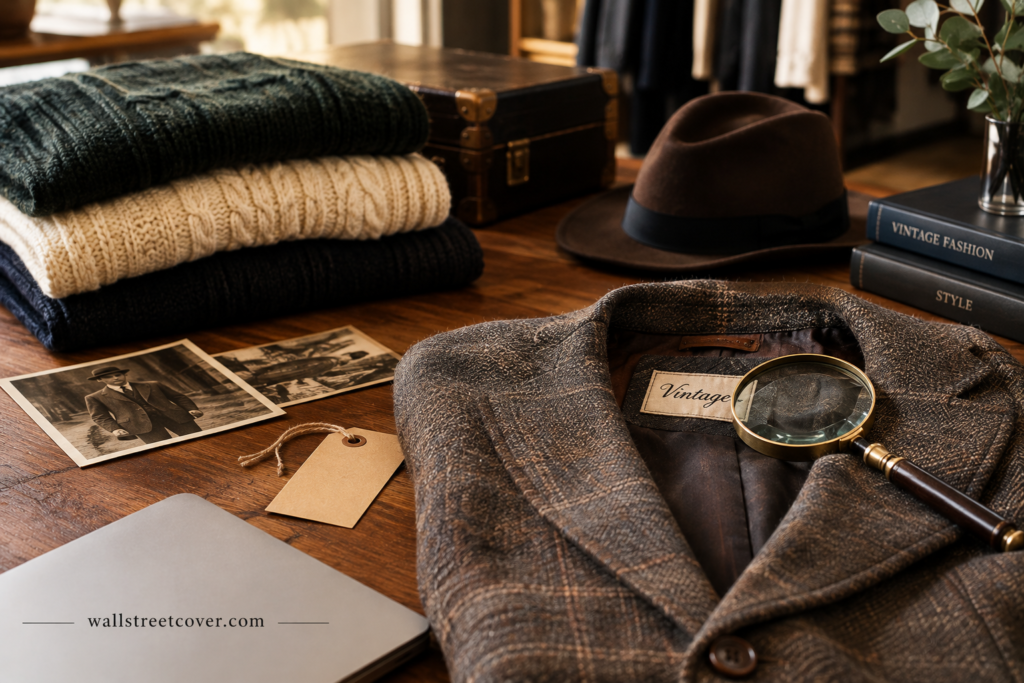
To tell if clothing is truly vintage, examine the label, construction, fabric, and hardware for signs consistent with a specific era. Genuine Vintage Fashion shows details that modern mass production usually skips.
Use this checklist when inspecting a piece:
- Labels and tags: Brand fonts, union tags, and care-label formats changed over time. Label research resources can help you date many garments.
- Construction details: Metal zippers, hand-finished seams, and specific stitching patterns often point to older manufacturing.
- Fabric and fibers: Older natural fibers and early synthetics feel and behave differently than modern blends.
- Hardware and fastenings: Buttons, snaps, and zipper pulls carry era-specific styles and maker marks.
- Sizing and cut: The overall silhouette should match the decade it claims to represent.
- Signs of age: Gentle, even wear is normal. Be cautious if a “vintage” item looks factory-fresh, since it may be reproduction or retro.
When authenticity or provenance matters, especially for designer pieces, buy from sellers who document origin and stand behind their descriptions.
How to Shop for Vintage Fashion
Shop Vintage Fashion by knowing your measurements, inspecting condition closely, and buying from sources that match your goals and budget. Different channels suit different needs.
Where to look:
- Thrift and charity shops: Affordable and unpredictable, ideal for patient hunters willing to dig.
- Dedicated vintage stores: Curated selections with staff who can help date and describe pieces.
- Online marketplaces: Broad selection and search tools, though quality control varies, so read descriptions and seller reviews carefully.
- Consignment and luxury resale: Best for authenticated designer and archival pieces, often with condition reports.
- Flea markets, estate sales, and fairs: Strong for accessories, denim, and unexpected finds.
Smart shopping habits:
- Measure a garment you already own and love, then compare listed measurements rather than trusting the size label.
- Ask for extra photos of seams, labels, linings, and any flaws.
- Confirm return policies before buying online.
- Prioritize condition and fit over a “deal” you’ll never wear.
Vintage Clothing Sizing: What Buyers Need to Know
Vintage Fashion sizes usually run smaller than modern sizes, so never rely on the number or letter on the tag. Clothing sizing has drifted over the decades, meaning an older “medium” may fit like a current small.
Because standards varied by decade, country, and brand, the only reliable approach is measurements. Follow these steps:
- Take your bust, waist, hip, and inseam measurements.
- Compare them to the garment’s flat measurements listed by the seller.
- Leave room for ease, since some older cuts fit more closely than modern ones.
- Remember that many Vintage Fashion pieces cannot be let out much, so buy for the body you have now.
If a piece is slightly too big, a good tailor can often adjust it. Sizing down is far harder, so err toward fit or a touch of room.
How to Style Vintage Fashion Today
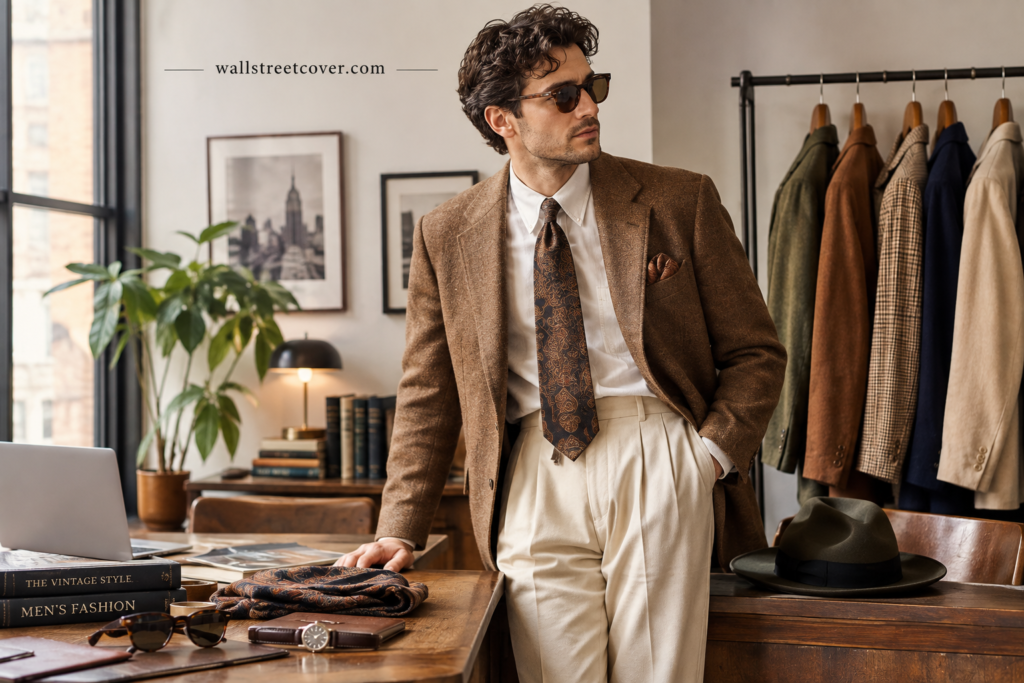
Style Vintage Fashion by mixing one or two standout period pieces with modern basics for a look that feels current rather than costume-like. Balance is the key to wearing Vintage Fashion every day.
Practical styling approaches:
- Anchor with a single hero piece: Let a 1970s jacket or 1950s dress lead, and keep everything else simple.
- Blend eras and new items: Pair Vintage Fashion denim with a contemporary tee, or a Vintage Fashion blouse with modern trousers.
- Update proportions: Tuck, belt, or layer older garments to suit current silhouettes.
- Modernize with accessories and shoes: Fresh footwear and minimal jewelry keep a look grounded in the present.
- Tailor for fit: Small alterations transform a good Vintage Fashion find into a wardrobe staple.
The goal is personal style, not historical reenactment. Wear the pieces that make you feel confident, and let them read as intentional choices.
Vintage Fashion and Sustainability
Vintage fashion supports sustainability by extending the life of existing garments and reducing demand for new production. It falls under the broader movement of slow Vintage Fashion, which favors durability and reuse over rapid, disposable trends.
Buying vintage keeps usable clothing out of the waste stream and sidesteps the resources required to manufacture new items. It also encourages a more thoughtful relationship with your wardrobe: you buy less, choose better, and keep pieces longer. While Vintage Fashion alone cannot solve the Vintage Fashion industry’s environmental challenges, it is a meaningful, practical alternative to fast Vintage Fashion.
How to Care for Vintage Clothing
Care for Vintage Fashion clothing gently, since older fabrics and stitching are often more fragile than modern textiles. Thoughtful maintenance preserves both appearance and value.
Core care practices:
- Test before cleaning: Identify the fabric first, and when unsure, choose the gentlest method.
- Favor hand washing or professional cleaning: Delicate and structured pieces often do best outside a standard machine.
- Store carefully: Use padded hangers for structured garments and fold heavy knits to prevent stretching.
- Protect from light and moisture: Keep pieces in a cool, dry, dark space to avoid fading and mildew.
- Address stains cautiously: Harsh treatments can damage aged fibers, so start mild and go slow.
- Repair early: Fix small issues before they worsen, and use a specialist for valuable items.
When in doubt about a rare or expensive piece, consult a professional who handles Vintage Fashion textiles.
Why Vintage Fashion Remains Popular
Vintage Fashion endures because it offers individuality, quality, and meaning that mass-produced clothing struggles to match. A vintage piece carries a story, a distinctive design, and often better construction than fast Vintage Fashion.
Several forces keep interest high: nostalgia for past decades, the desire for unique wardrobes, growing environmental awareness, and the visibility of Vintage Fashion across social media and popular culture. Together, these factors have moved vintage from a niche hobby to a mainstream way of dressing.
Common Mistakes When Buying Vintage Clothing
Avoid these frequent pitfalls to shop with more confidence:
- Trusting the size tag: Always go by measurements, not the label.
- Skipping the condition check: Look closely for stains, moth holes, weak seams, and broken zippers.
- Confusing retro with vintage: Confirm a piece is genuinely old, not a modern imitation.
- Ignoring fabric care needs: Some finds require special cleaning you may not want to manage.
- Buying on impulse: A bargain you won’t wear is not a bargain.
- Overlooking alterations: Factor in the cost and feasibility of tailoring before you buy.
Frequently Asked Questions About Vintage Fashion
What is vintage fashion?
Vintage fashion is clothing from a previous era, generally 20 to 100 years old, worn and collected because it reflects the styles, fabrics, and craftsmanship of its time.
How old does clothing have to be to be vintage?
Most definitions place Vintage Fashion at roughly 20 to 100 years old. Some sellers use a stricter 30-year threshold, while items over 100 years are considered antique.
What is the difference between vintage and retro fashion?
Vintage clothing is genuinely from a past era. Retro clothing is newly made to imitate the look of an earlier time, so it resembles the past without being old.
How can you tell if clothing is truly vintage?
Check the label, construction, fabric, and hardware for era-appropriate details. Metal zippers, older label formats, and specific stitching often signal authentic Vintage Fashion.
Is vintage fashion sustainable?
Yes. Buying Vintage Fashion extends the life of existing garments and reduces demand for new production, making it a practical part of slow, more sustainable Vintage Fashion.
How does vintage sizing work?
Vintage Fashion sizes typically run smaller than modern sizes. Rely on the garment’s actual measurements rather than the number or letter on the tag.
How should vintage clothes be cared for?
Handle them gently. Hand wash or professionally clean delicate pieces, store them properly, and repair small issues early to protect fabric and value.
Where can you buy authentic vintage clothing?
Look to dedicated Vintage Fashion stores, thrift and charity shops, curated online marketplaces, consignment and luxury resale sites, and estate sales or fairs.
Conclusion
Vintage fashion rewards you with individuality, quality, and a lighter footprint, but only if you shop and care for pieces wisely. Learn the eras, verify authenticity, trust measurements over tags, and treat delicate garments with care. Start with one hero piece you love, style it alongside modern basics, and build a wardrobe that feels genuinely your own.


